 Viral Swipe File


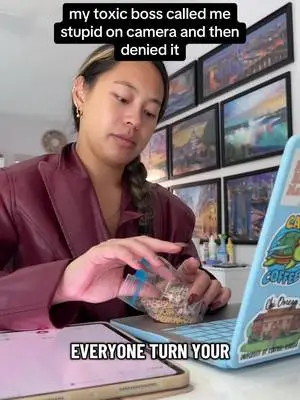
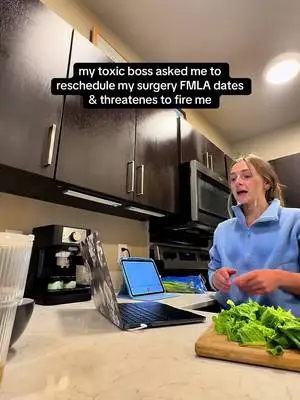
Did you know that starting on May 26, 2026, your boss will have a new legal obligation that could change your life at work?
Mental Health & Wellbeing · Founder Perspective, Basics Lesson
Why it beat its usual
3,399xthe views @alexandreferreira_adv usually gets
4.9M views
- This video4.9M
- Usual views1.4K
- Mental Health & Wellbeing median230× the median viral factor of the 1,467 Mental Health & Wellbeing videos in the library (median 14.8x).
- Founder Perspective median127× the median viral factor of the 59 Founder Perspective videos in the library (median 26.7x).
- Basics Lesson median25× the median viral factor of the 441 Basics Lesson videos in the library (median 137x).
- Views against the Mental Health & Wellbeing niche18× the median of the 1,467 Mental Health & Wellbeing videos in the library (median 276,566).
- Engagement against the Mental Health & Wellbeing niche5.3%, below the Mental Health & Wellbeing median of 7.7%.
- Engagement
- 5.25%
- Rank in Founder Perspective
- #2
- Rank in Mental Health & Wellbeing
- #24
How it's built
- Founder Perspective
- Basics Lesson
- Direct address hook
- Screen Recording
- Text Overlay
The hook speaks straight to the viewer, built to read like a message rather than a post. Built as Screen Recording and Text Overlay. The founder or someone from the team is on screen, built to put a face on the brand. It presses on hope: things could get better. The tone is educational.
It is pitched at viewers who feel the problem, so it names the pain, not the fix.
- Hook on screen
- “Did you know that starting on May 26, 2026, your boss will have a new legal obligation that could change your life at work?”
What's said
7:27 · EnglishDid you know that starting on May 26, 2026, your boss will have a new legal obligation that could change your life at work and if they don’t meet this obligation, you may have the right to take them to court This video is about that and I’m going to explain it to you in a way you can really
understand Let’s start from the beginning The federal government updated NR-1, which is Regulatory Standard No. 1, the most important regulation on workplace safety and health in Brazil And this update, which will come into full force on May 26, 2026, introduces a change that has never existed before in the history of Brazilian labor law For the first time, managing psychosocial risks becomes a formal requirement alongside physical, chemical, and biological risks within the company’s risk management program But what are psychosocial risks?
I’ll explain it in a very simple way Psychosocial risks are situations in the workplace that can harm your mental and emotional health Examples include impossible-to-meet targets, overwork, workplace bullying, lack of support from supervisors, tasks that are repetitive or lonely, and an imbalance between effort and reward These are situations you’ve probably already experienced or are experiencing right now The boss who yells, the target that no one can hit, the constant pressure that doesn’t let you sleep, work that never ends, the feeling that you’re being pushed beyond what’s human All of that now has a name in the law The company is required to identify and control these risks Now I need
you to understand the scale of this problem in Brazil, because the numbers are very serious In 2025, the social security system granted almost 550,000 benefits for mental and behavioral disorders, mainly anxiety and depression, with a growth of almost 16% compared to 2024, which had already been a record 550,000 workers off work due to mental health problems in a single year And that number grows every year So what changes now with the updated NR-1?
I’m going to lay out the concrete points so you can understand exactly what your boss is required to do First point: All companies, without exception, must carry out preventive actions that include identifying and assessing psychosocial risk factors The regulation does not establish exceptions based on the size of the company or the number of employees This applies to large multinationals and to companies with two employees Any boss who has registered employees has to comply with this standard Second point: The company needs to document everything: the records, such as a risk inventory, the action plan, and the criteria adopted, or the criteria that were adopted must be kept for at least twenty
years in other words, the company has to record the risks it identified, what it did to control those risks, and show that it is complying with the plan, and keep that documentation for twenty years. Third point: the identification of psychosocial risks must cover all forms of work organization, including remote work, hybrid work, and telework. If you work from home, this rule applies to you too. Your employer has to assess whether the remote work environment is creating psychosocial risks.
Fourth point: the company has to set up reporting channels. Law 14,457 of 2022 requires that every company with a works council maintain a reporting channel that is confidential for receiving reports of workplace bullying, sexual harassment, and other forms of violence at work. If your company has a works council and doesn’t have this channel, it is already breaking the law. The fifth point is the most important for you as a worker.
Failure to comply creates liability for the company. The lack of documented management of psychosocial risks makes it easier to prove the employer’s liability in individual lawsuits for occupational illness and in civil actions brought by the Public Prosecutor’s Office for Labor for collective moral damages. This means the following: in practice, if you developed anxiety, depression, burnout, or any other mental health problem because of work, and the company didn’t have a risk management program that was up to date with psychosocial risks, then it becomes much easier to prove the company’s liability in court.
There’s one point that I need you to remember very well. The case law of the TST, which is our court that decides labor issues, is already recognizing a presumed causal link in cases of burnout, occupational depression, and harassment when there is a failure in risk management. The Superior Labor Court already holds that if the company did not fulfill its prevention obligations and the worker became ill, there is a relationship between the two events.
This opens the way for compensation. Now I want to tell you about something that happens in real life and that you need to know how to recognize. You may be suffering from psychosocial risks at your job right now and not even know that this has legal protection, that you are protected by law. So let me give you some concrete examples. If your boss calls you incompetent in front of your coworkers, that is a psychosocial risk and can be workplace bullying.
If you are given targets that change every month and are impossible to meet, that is a psychosocial risk. If you work with a constant fear of being fired, with frequent threats from your superior, that is a psychosocial risk. If you work overtime every day, can’t rest even on the weekend, and are already showing symptoms of burnout, that is a psychosocial risk. If you receive work messages all the time, including at night and on weekends, that is a psychosocial risk.
That’s it. and you're expected to respond outside working hours that can also be a psychosocial risk all these situations now have a legal basis that's much stronger than it was before and any company that doesn't manage these risks is not complying with the regulations now, a practical question what can you do if you're going through one of these situations…
The words behind 3,399x its usual
Make your own
“Did you know that starting on May 26, 2026, your boss will have a new legal obligation that could change your life at work?”
Same format: Founder Perspective
Highest viral factor first · All
 5,084xWant to win consistently in crypto?
 2,797xAre you ready to be controlled by your 'new money'? When we lose cash
 1,823x"I know who's behind BITCOIN"
 1,231xC’est pas avec ton livret A que tu vas t’acheter une maison.
 931xWhen there is a huge dip in the market but you and your friends are…
 671xHe created a $1.5 million company at 13 years old
 452xAre Taxes a Scam 👀!?
 358xDay 2 of building an app with @Replit
 340xmy 2025 eras
 254xTrump Launches His Crypto Project
201x#entrepreneur
 126xBTC now available in the UAE, KSA, Oman, Kuwait, Egypt, and Bahrain.
Same niche: Mental Health & Wellbeing
Highest viral factor first · All
 16Kxcuando de la nada me siento apagada, sin energías y con ganas de…
 11KxIsn't it so strange that one day we will all be gone? Even if…
 9,383xMy friend invited me to her gratitude group, here's why it changed…
 8,411xMy emotional support bunny after my 4th panic attack of the day
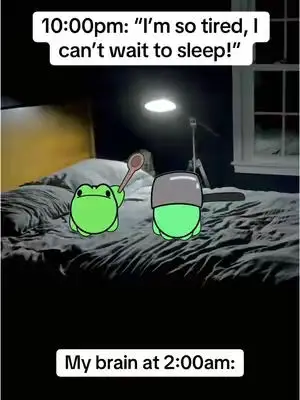 8,121x10:00pm: "I'm so tired, I can't wait to sleep!" My brain at 2:00am:
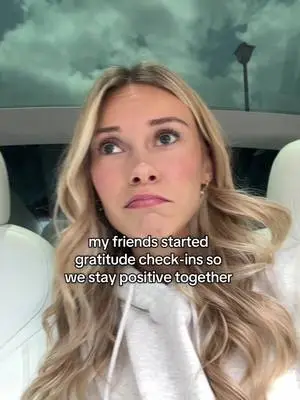 7,782xmy friends started gratitude check-ins so we stay positive together
 7,341xme because my social anxiety has decreased so much since I…
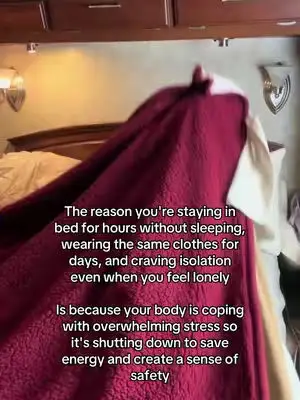 7,210xThe reason you're staying in bed for hours without sleeping, wearing…
 7,084xCHICAS snoopy me dice si estoy estresada o no en mi reloj JAKAKAAJ
 6,272xWdym you can see what your friends are grateful for every day?!
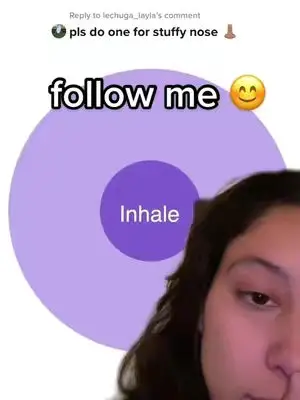 5,961xfollow me
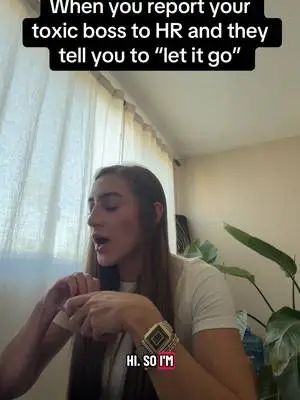
 5,688xLa terapia sale muy cara, mejor que la galleta me diga que hacer
About this video
3,399x: about 3,399 times the views @alexandreferreira_adv usually gets. Viral factor divides a video's views by its account's usual views, so it measures how far the video beat its creator's normal reach, whatever the size of the account. 5.3% engagement rate. 174,160 likes, 3,216 comments, 51,898 shares, 29,050 saves. Filed under Mental Health & Wellbeing, Founder Perspective and Basics Lesson.